Last updated October 31, 2026
 Smart locks
 House lockouts
 Re-keying
 Deadbolt upgrades
 Schlage
 Kwikset
 Car keys & fobs
Non-destructive entry first, always - and we re-key Schlage, Kwikset, and Baldwin locks on the spot while you watch
You get a price before we start. It does not change when we arrive. No surprises.
Get your free estimateSeasonal Locksmith Care for Chandler: Year-Round Homeowner’s Guide
A deadbolt that turns like silk in April can bind and stick by July, and it usually has nothing to do with the lock failing. Chandler’s Sonoran Desert climate pushes lock hardware through a heat-monsoon-mild cycle that most homeowner guides, written for places with rain and frost, never address. Steel door frames expand measurably in 110-degree heat. Wood frames swell when monsoon humidity arrives after months of dry air. Hardware on south-facing doors bakes under UV exposure that fades finishes and stresses keypads. This guide covers what actually happens to locks in Chandler, when to intervene, and which five-minute maintenance steps prevent most seasonal failures before they strand you on the wrong side of your own door. For more guides & resources on keeping your home secure year-round, explore our blog.
Styles & brands we work with
Quick Answer
Seasonal lock care in Chandler, AZ follows the heat-monsoon-mild cycle, not a spring-summer-fall-winter calendar. The three essential tasks are graphite-lubricating cylinders each spring before extreme heat, realigning deadbolts after monsoon humidity swells door frames, and auditing exterior hardware for corrosion each fall. Most seasonal lock problems are alignment and lubrication issues, not broken hardware, and can be prevented with about 20 minutes of attention per door per year.
Table of Contents
- Why Chandler’s Climate Demands a Different Maintenance Calendar
- Pre-Summer (April to May): Lubricate Before the Heat Hits
- Monsoon Season (July to September): Humidity, Swelling, and Deadbolt Misalignment
- Post-Monsoon Audit (October): Corrosion Check After Sustained Moisture
- Mild Season (November to March): Weatherstripping and Hardware Replacement Window
- Year-Round: Sun Exposure and South-Facing Door Hardware
- Special Attention: Keypads, Smart Locks, and Electronic Contact Points
- Common Mistakes to Avoid
- When to Call a Professional
- Frequently Asked Questions
- The Bottom Line
Why Chandler’s Climate Demands a Different Maintenance Calendar
Chandler homeowners live in one of the hottest metropolitan areas in the United States. The city regularly sees 100-plus days above 100 degrees, and monsoon storms between July and September deliver abrupt humidity spikes that can push indoor relative humidity from single digits to 60 percent or higher within hours. That swing matters for locks because the materials around your lock, the door frame, the door slab, the strike plate, react to moisture and temperature faster than the lock mechanism itself does.
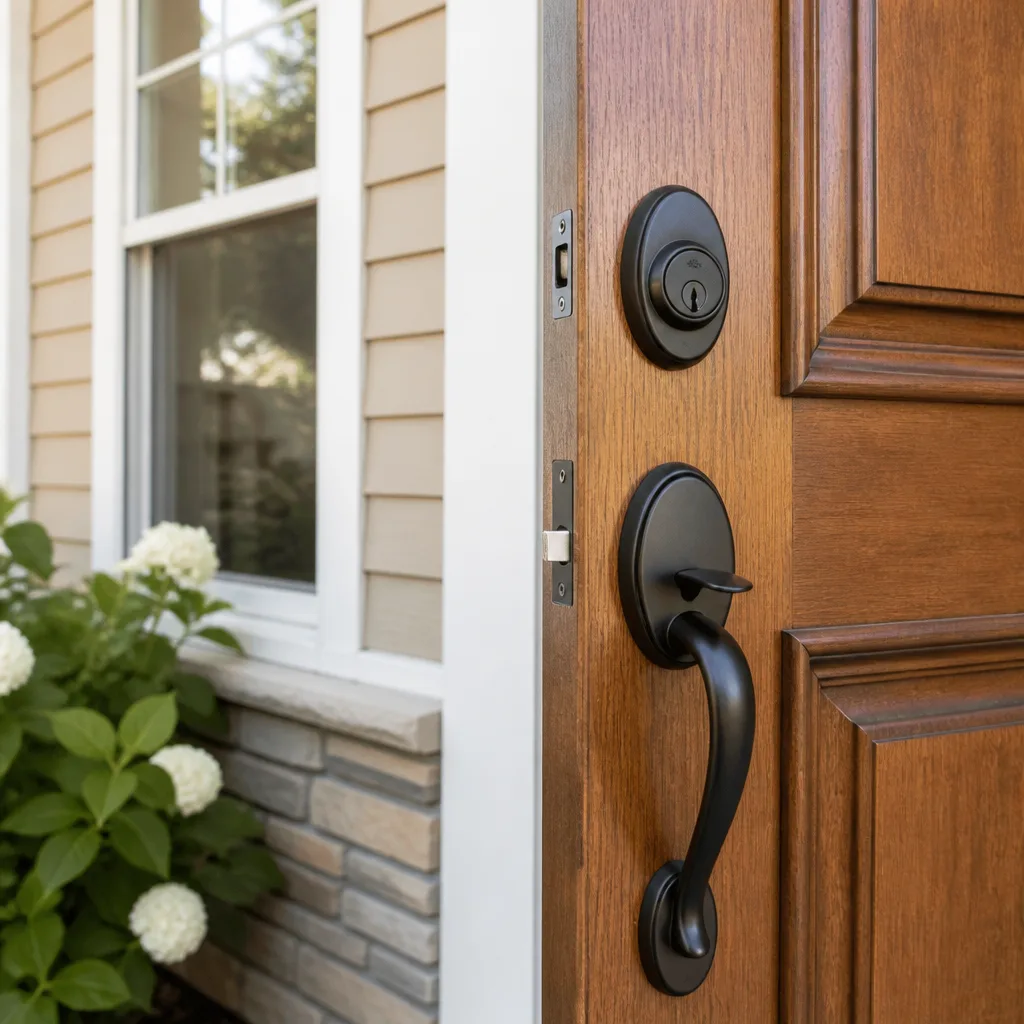
A steel deadbolt sits inside a wood or steel door frame. In Phoenix-area summer heat, steel frames expand enough to shift the bolt path by fractions of a millimeter. That sounds trivial, but a deadbolt only has about an eighth of an inch of tolerance before it starts scraping. When monsoon humidity arrives, wooden frames absorb moisture and swell, tightening the gap between door and frame further. The result is a deadbolt that requires lifting, pulling, or forcing the door to throw. Homeowners often assume the lock is failing. In our experience, most Chandler seasonal lock complaints are frame alignment issues that a strike plate adjustment solves in minutes, and the lock itself never needs replacing.
Standard maintenance calendars say “lubricate your locks every fall.” In Chandler, that advice is six months too late. Lubrication needs to happen before the extreme heat arrives, when carriers evaporate and residues turn gummy. Timing the work around the desert’s actual stress points prevents the annual cycle of stuck locks in August and corroded hardware in October.
For a full look at the services we provide around Chandler, visit the Thornton Lock & Key home page. Whether you need rekeying after a move or emergency help during a monsoon lockout, we work on the hardware you actually have, from a basic Kwikset to a high-security Mul-T-Lock or Abloy cylinder.
Pre-Summer (April to May): Lubricate Before the Heat Hits
The single most impactful seasonal task for Chandler homeowners is lubricating every exterior lock cylinder in April or early May, before daytime highs settle above 100 degrees. The goal is to have clean, properly lubricated pins and springs before the heat forces whatever you apply to either evaporate or congeal.
The common mistake is using WD-40. WD-40 is a water displacement product with a solvent carrier that evaporates quickly in Chandler heat. What remains is a thin residue that attracts dust, and in the desert, dust is abundant. Repeated WD-40 applications build up a gummy film inside the cylinder that makes pins sluggish and invites key sticking. The right product is powdered graphite, a dry lubricant that does not evaporate, does not attract grit, and performs consistently from freezing temperatures up to well past what any Chandler afternoon delivers.
How to Lubricate a Lock Cylinder Correctly
- Insert the key fully into the cylinder and turn it to the unlocked position.
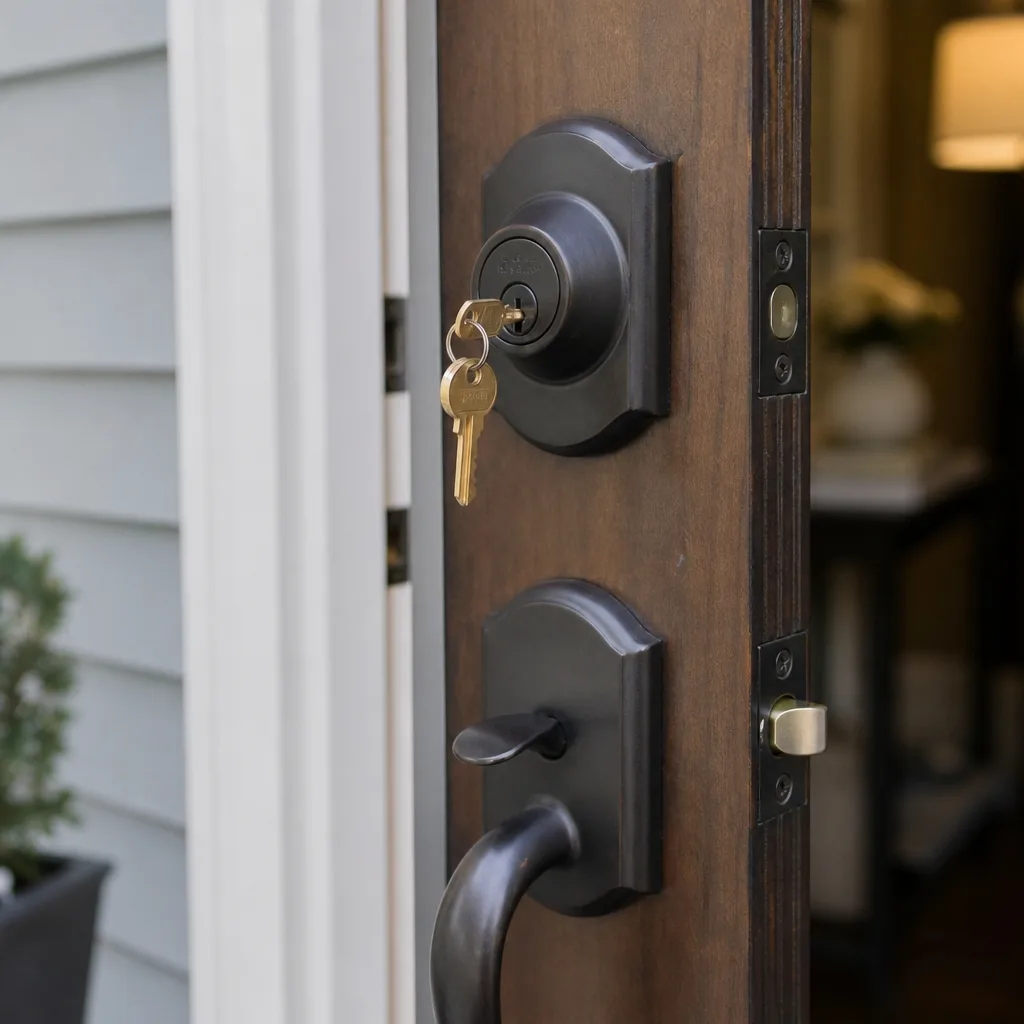
- Apply a short puff of powdered graphite directly into the keyway. A tube with a narrow applicator tip works best.
- Work the key in and out five or six times to distribute the graphite across the pins.
- Turn the key through its full range twice, then remove it and wipe any residue from the key with a dry cloth.
- Repeat on every exterior door, including side gates, garage service doors, and padlocks on storage sheds.
This is also the right moment to check deadbolt alignment. Close the door slowly and watch the deadbolt line up with the strike plate. If you have to lift the handle or push the door to throw the bolt, the alignment is drifting. Catching that drift in May is easier than dealing with it in August, when the frame has expanded further and the lock may refuse to turn at all.
For Chandler homeowners who discover a cylinder that is too far gone for graphite to help, a rekey service is often the answer. Rekey Locks in Rio Verde explains how we change the internal pins so your existing hardware works with a new key, no full lock replacement needed. The same principle applies to Chandler doors with worn cylinders, and it is usually faster and better value than swapping hardware.
Monsoon Season (July to September): Humidity, Swelling, and Deadbolt Misalignment
Chandler’s monsoon season flips the moisture equation. After months of single-digit humidity, a storm cell can push moisture levels high enough that wooden door frames absorb water and swell overnight. Doors that have closed cleanly since spring suddenly stick, rub, or refuse to latch. Deadbolts that aligned perfectly now hit the edge of the strike plate instead of passing through cleanly.
This is not a lock failure. It is the door assembly moving around the lock. The fix priorities during monsoon season are:
- Keep the strike plate aligned. If the deadbolt scrapes the top or bottom of the strike plate opening, you may be able to file the plate opening slightly rather than resetting the lock. This is a five-minute fix that restores smooth operation.
- Resist the urge to slam or force the door. Forcing a deadbolt through a misaligned strike plate wears the bolt, bends the plate, and can eventually damage the lock’s internal tailpiece.
- Check wooden doors at the top and latch side. If paint is rubbing off or the door binds in the frame, the slab itself has swelled. A light sanding of the edge and a reapplication of exterior paint or sealant reduces moisture absorption for the rest of the season.
- Monitor storm door closers. Pneumatic closers lose pressure in extreme heat and often end up misadjusted by August. A storm door that slams behind you is a hazard to the door frame, which is the primary cause of deadbolt misalignment we see in Chandler during monsoon.
If a deadbolt has already reached the point where the key will not turn in the cylinder, that is a different problem. Monsoon humidity can cause dust inside an unlubricated cylinder to cake and jam pins. In that situation, a professional can disassemble, clean, and re-lubricate the cylinder, and if the key is bent or worn, cut a new one before it breaks off in the lock.
Lockouts also spike during monsoon, not because locks behave differently, but because people rush through storms, misplace keys, and sometimes get caught outside when a wind gust closes a door behind them. If that happens in Chandler, the Emergency Locksmith in Rio Verde page describes how our emergency response works, and the same service applies to Chandler lockouts day or night.
Post-Monsoon Audit (October): Corrosion Check After Sustained Moisture
By October, the monsoon has passed, evenings are cooling, and Chandler homeowners can open their doors without letting a wall of heat inside. This is the best window for a methodical hardware audit, because any corrosion or electronic damage from the humid season is now visible and unlikely to worsen quickly if fixed immediately.
The post-monsoon checklist:
- Inspect every exterior lock body for rust or pitting. Pay closest attention to locks on gates, sheds, and pool equipment enclosures, which take direct rain and splash. Hardware-grade stainless or marine-grade finishes resist this better, but most residential lock bodies are not built for repeated direct moisture exposure.
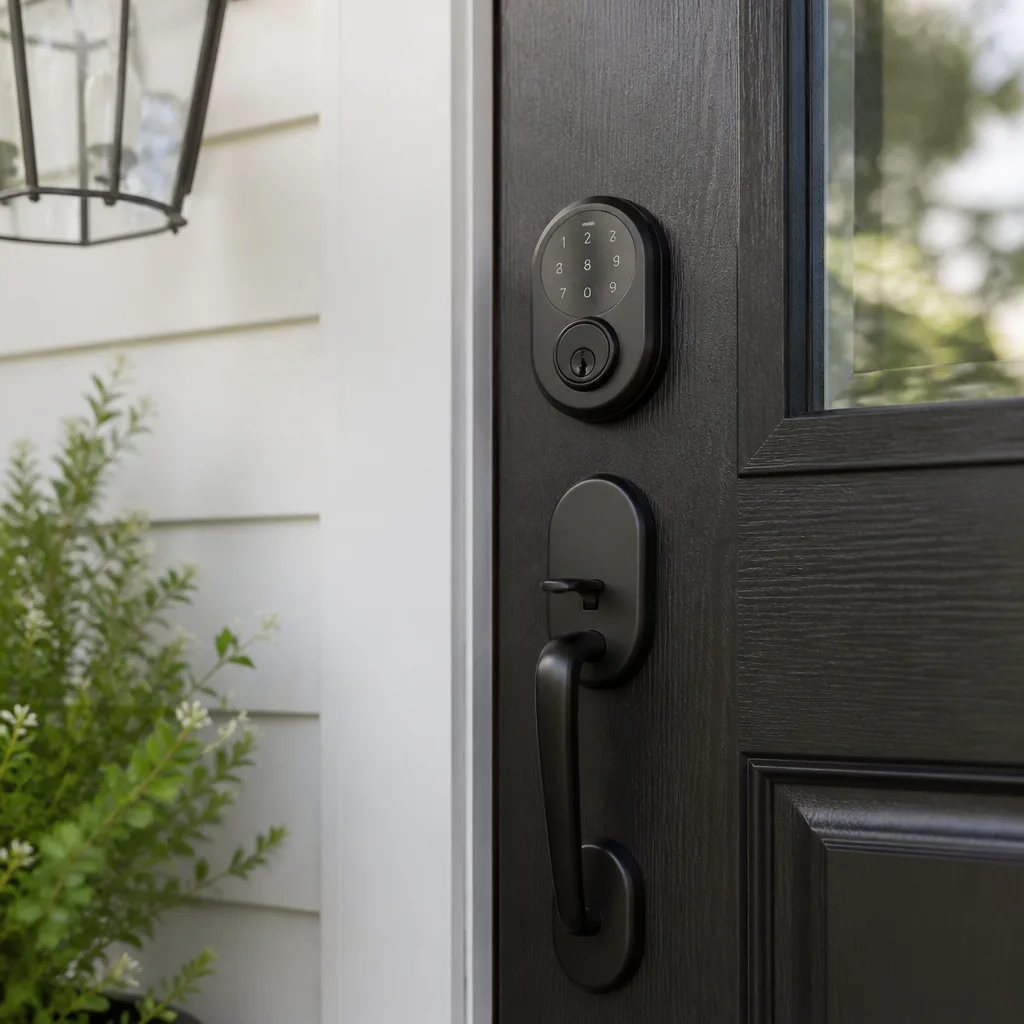
- Check keypad buttons on electronic deadbolts. Months of dry heat can make button membranes brittle, and monsoon moisture then seeps into micro-cracks. Buttons that require extra pressure, double-presses, or only work after several attempts are showing early water intrusion.
- Inspect smart lock battery compartments. Look for white or green residue on battery terminals. This is corrosion from moisture ingress and it reduces conductivity, which shortens battery life and eventually causes intermittent lock operation.
- Test charging contacts on any smart lock with a rechargeable or backup-contact feature. Wipe contacts with a dry cloth and look for pitting. Even minor contact corrosion can prevent the backup power feature from working when you need it.
- Re-lubricate exterior cylinders with graphite. Monsoon humidity may have washed some graphite out of cylinders that see direct rain or irrigation spray.
For Chandler homeowners who want to upgrade exterior hardware before the next season, this October audit is the moment to make the decision. Waiting until summer means installing hardware in punishing heat, and waiting until winter means living with failing hardware through the mild but not always dry months. When a cylinder is too corroded to salvage, or a keypad has failed, replacing the hardware with a quality product from Schlage, Baldwin, or a high-security line like Mul-T-Lock or Abloy is a meaningful upgrade. See our Choosing the Right Locksmith Brand: A Buyer’s Guide for Chandler for help matching hardware to your needs. We carry and service those brands, and we can talk through what makes sense for your door without upselling you into gadgets you will not use.
Mild Season (November to March): Weatherstripping and Hardware Replacement Window
Chandler’s mild season, roughly November through March, is the only stretch of the year when working on a door is comfortable for more than ten minutes, and that makes it the natural window for anything that requires disassembly, replacement, or patient adjustment. The most underappreciated winter task for lock health is weatherstripping replacement, because the condition of your weatherstripping directly controls how your door sits in its frame when the deadbolt engages.
Here is the connection. Weatherstripping compresses over time. When it compresses unevenly, the door begins to rest at a slight angle in the frame. Once the door is angled, the deadbolt path no longer lines up with the strike plate opening. The fix, in most Chandler homes, is not a new lock. It is new weatherstripping. Replacing worn or compressed door seals restores the door to its original position, and the deadbolt alignment corrects itself.
Winter is also the right time to address finish wear on sun-exposed hardware, which we cover in more detail in the next section. The mild-season checklist:
- Replace weatherstripping on any door that requires pushing or pulling to fully close before the deadbolt will turn.
- Adjust or replace hinge screws. Loose top hinges are a common cause of door sag in Chandler, especially on heavy solid-core doors that face southwest exposure.
- Test every key. Worn keys are the number one cause of ignition problems and stuck cylinders. If a key is shiny-smooth, bent, or requires jiggling, replace it before it snaps off in a lock.
- Address any hardware that failed the post-monsoon audit before the next heat cycle begins.
- Consider upgrading to keyless or high-security hardware while installation can be done in mild temperatures.
If you discover a cylinder that needs internal service rather than just adjustment, the Rekey Locks in Rio Verde page details what rekeying involves and when it is the right move. The same work applies in Chandler, and it is the most practical way to restore security after a lost key or a tenant change without replacing perfectly good hardware.
Year-Round: Sun Exposure and South-Facing Door Hardware
Every Chandler homeowner with a south- or west-facing entry learns the same lesson eventually: the sun destroys exterior hardware faster than any other force in the desert. While a north-facing door in Chandler can wear the same lock for a decade without visible degradation, a west-facing door in direct afternoon sun can show finish pitting, keypad button failure, and cylinder temperature issues within three to five summers.
The science is straightforward. Dark-colored metal hardware absorbs solar radiation and can reach surface temperatures well above 140 degrees on a 110-degree day. That heat accelerates oxidation, breaks down protective clear coats, and makes plastic or rubber keypad membranes brittle. Additionally, the thermal expansion cycle, heating to 140 degrees every afternoon and cooling to 80 at night, stresses the lock’s internal components in a way that a stable-temperature lock never experiences.
What to watch for on sun-exposed doors:
- Finish fading or discoloration on lock bodies, deadbolts, and handlesets. This is cosmetic at first, but pitting eventually follows.
- Keypad button failure on electronic deadbolts. Sun-cracked button membranes let dust and moisture into the circuit board, which kills the lock within a season or two.
- Key sticking in exposed cylinders even after lubrication. The cylinder body heats unevenly, and dust combined with whatever lubricant remains can make pins bind.
- Smart lock battery failures occurring faster on sun-facing doors. Ambient heat shortens lithium battery life and can trigger low-battery warnings even on relatively fresh batteries.
The practical strategies for Chandler sun exposure:
- Install an awning, shade screen, or decorative sun cover over south- and west-facing entries. This is the single most effective step for extending exterior hardware life.
- Choose light-colored or satin-finish hardware when replacing sun-exposed locks. Satin nickel reflects more heat than dark bronze and shows less pitting over time.
- Apply a UV-protectant exterior wax to finished lock bodies twice a year, once before summer and once after monsoon.
- Prioritize keypad and smart lock placement on doors with some afternoon shade where possible.
When sun-exposed hardware has reached the end of its life, we can replace it with a product that fits the door without modifying the bore, and the brands we service most often in Chandler are Schlage, Kwikset, Yale, and Baldwin on the residential side. For homeowners who want hardware that shrugs off heat and resists pitting, we can also supply and install high-security cylinders from Medeco, Mul-T-Lock, or Abloy, which are built to a different standard than big-box hardware.
Special Attention: Keypads, Smart Locks, and Electronic Contact Points
Chandler’s combination of extreme dry heat and seasonal monsoon moisture is uniquely hard on electronic locks. Most smart locks and keypad deadbolts are designed in coastal climates and tested in moderate conditions. They do not commonly account for 135-degree door surface temperatures or for the dust that blows across Chandler during any monsoon outflow.
Three electronic lock problems we see regularly in Chandler:
- Button membrane failure. After enough heat-cycling, the rubber or silicone layer under the keypad buttons develops micro-cracks. Dust gets in, and buttons stop registering presses reliably. This is a sunlight problem as much as a heat problem.
- Battery terminal corrosion. Moisture from monsoon humidity condenses inside the battery compartment, especially when a cool evening follows a humid afternoon. Corroded terminals reduce voltage and cause “dead lock” symptoms even with fresh batteries installed.
- Motor strain from misalignment. Electronic deadbolts use a small motor to throw the bolt, not your hand. If the door is misaligned and the bolt meets resistance, that motor works harder every time, which shortens its life. A manual deadbolt tolerates minor alignment issues for years. An electronic deadbolt does not.
The annual maintenance routine for electronic locks in Chandler adds a few steps to the mechanical checklist:
- Every spring: Replace batteries, clean terminals with a dry brush, and apply a light dielectric grease to the contacts before heat season.
- Every fall: Inspect the keypad for button wear and wipe the entire lock body with a dry cloth. If any buttons feel soft or require extra pressure, schedule a replacement before the unit fails entirely.
- Every time you change batteries: Check that the deadbolt aligns cleanly. If it does not, fix the alignment first, then test the motor. The lock will last noticeably longer.
- Using WD-40 on lock cylinders. It evaporates in Chandler heat, leaves a sticky residue that attracts dust, and eventually makes the cylinder sticky. Use powdered graphite instead.
- Waiting for visual rust before addressing corrosion. By the time exterior hardware shows pitting, the internal components have usually been compromised for a season or more. Check before it is visible.
- Forcing a deadbolt through misalignment. Every forced turn bends the strike plate and wears the bolt. The door will only get harder to operate, and eventually the lock will fail when you need it most.
- Ignoring weatherstripping. Worn door seals cause the door to sag, and a sagging door is a misaligned deadbolt. Fix the weatherstripping before calling a locksmith for a problem that likely is not the lock.
- Assuming a stuck key is a lock problem. In Chandler, most stuck keys are worn keys, not worn locks. If your key is smooth, bent, or needs jiggling, replace it before it snaps off inside the cylinder.
- Lubricating only the front door. The back door, garage service door, and side gate all matter. A padlock on a south-facing gate bakes in the sun and fails faster than a shaded front entry.
- Putting off fixes until summer. The worst time to work on a door in Chandler is July. The best time was May. The second-best time is October.
For Chandler homeowners who have a keypad lock that has already failed, do not assume you need a full smart-home upgrade. In many cases, a quality mechanical deadbolt from Sargent or Mul-T-Lock provides better long-term reliability for the desert than a mid-range smart lock, and we will tell you that straight instead of selling you a replacement gadget that will fail the same way in three summers. Our job is to find the hardware that fits how you actually use the door, not to push electronics on someone who just wants a lock that works.
If you have lost all keys to a vehicle alongside a house key, remember that we handle Car Key Replacement in Rio Verde as well as Chandler, covering transponder and fob-style keys without the dealership markup. One call covers both the front door and the driveway.
Common Mistakes to Avoid
When to Call a Professional
Many seasonal lock tasks are genuinely do-it-yourself if you have graphite, a screwdriver, and patience. Some are not. Call a locksmith when a key breaks off in a cylinder, when a cylinder will not turn even after proper lubrication, when an electronic deadbolt is unresponsive even with fresh batteries installed by you, when deadbolt misalignment requires re-drilling the strike plate opening, or when you need security changes after a move, break-in, or tenant turnover.
If you are in Chandler and want an honest assessment before spending money, Thornton Lock & Key offers free estimates, and you can reach us at (888) 455-7175. We will tell you if the lock needs replacing, if a rekey fixes the problem for less, or if the issue is the door frame rather than the hardware. No dispatch fee, no pressure, no upselling. Just a straight answer from a named local business that works on the lock you actually have.
Frequently Asked Questions
Exterior locks in Chandler should be lubricated with powdered graphite twice a year: once in April or May before summer heat, and once in October after monsoon season. Interior locks rarely need attention more than once every two to three years. If a lock has been exposed to direct rain or irrigation spray, re-lubricate within a week of the exposure.
Summer sticking is almost always caused by thermal expansion of the steel door frame, not by the lock itself. As the frame heats, it expands and shifts the strike plate position relative to the bolt. This is especially common on west-facing Chandler doors that take direct afternoon sun. The fix is usually a strike plate adjustment rather than lock replacement.
Yes. WD-40’s carrier evaporates quickly in Chandler heat, leaving a residue that attracts dust and eventually gums up the cylinder pins. Use a dry lubricant like powdered graphite for lock cylinders. For hinges and latch mechanisms, a silicone-based lubricant is acceptable.
After monsoon season, inspect every exterior lock for rust, pitting, and keypad button wear. Check battery terminals on smart locks for white or green corrosion. Wipe contacts clean, re-lubricate cylinders with graphite, and call a locksmith if any cylinder feels rough when the key turns. This is also the right time to replace any hardware that failed during humid months before the next heat cycle.
They do. South- and west-facing doors in Chandler receive direct desert sun and can reach surface temperatures exceeding 140 degrees on summer afternoons. This heat accelerates finish wear, makes keypad buttons brittle, and stresses lock internals through daily thermal cycling. Shaded entries in Chandler routinely last years longer with the same hardware.
If the lock operates smoothly and the only concern is who has keys to it, rekeying is the answer. Rekeying changes the internal pins so old keys no longer work, while keeping your existing hardware. If the cylinder is corroded, the finish is pitted, or internal components are failing, replacement is appropriate. We can assess this in Chandler and give you a straight recommendation either way. Call (888) 455-7175 for a free estimate.
The Bottom Line
Chandler lock care follows the desert’s real calendar: lubricate with graphite in spring, realign deadbolts during monsoon, audit for corrosion in fall, and use the mild winter window for weatherstripping and hardware replacement. The overwhelming majority of seasonal lock problems in Chandler are alignment, lubrication, and weatherstripping issues that cost little to fix and less to prevent. For everything else, a professional who knows the desert’s specific stresses beats a generic hardware-store answer. Thornton Lock & Key works on the hardware you actually have, from Kwikset on your back door to Abloy on your high-security entry, and we serve Chandler year-round at (888) 455-7175.
Written by the team at Thornton Lock & Key, serving Chandler since 2018.