
Last updated October 31, 2026
 House lockouts
 Re-keying
 Deadbolt upgrades
 Smart locks
 Schlage
 Kwikset
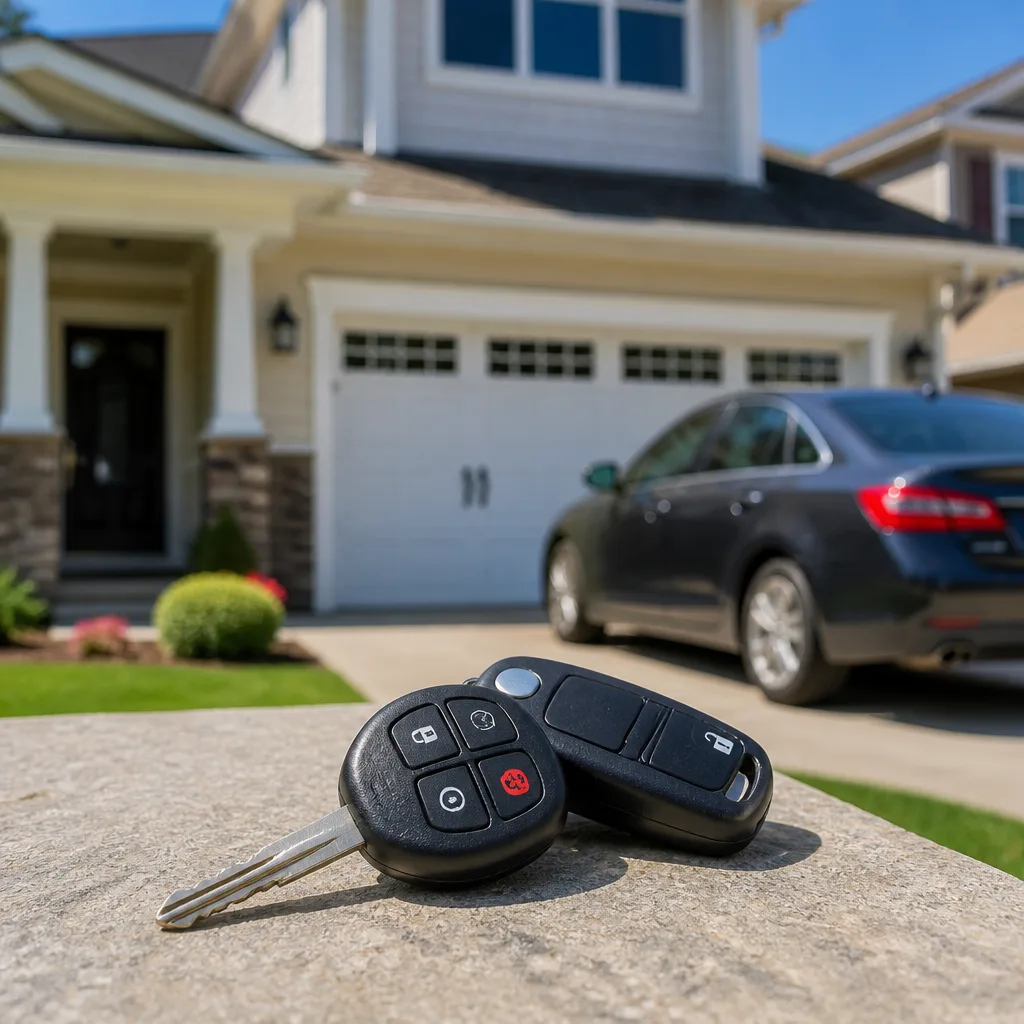 Car keys & fobs
Non-destructive entry first, always - and we re-key Schlage, Kwikset, and Baldwin locks on the spot while you watch
You get a price before we start. It does not change when we arrive. No surprises.
Get your free estimateCar Key Replacement Troubleshooting: Common Problems and How to Fix Them
Most drivers assume a new car key should work perfectly the moment they pick it up. When it doesn’t, the first reaction is usually frustration aimed at whoever made the key. Here’s what we’ve learned from handling thousands of Car Key Replacement services in Chandler and the surrounding Valley communities: the key itself is rarely the problem. A newly cut key that won’t turn, a transponder key that cranks but won’t start, or a fob that won’t unlock the doors almost always points to a skipped or out-of-sequence programming step. This guide breaks down the exact diagnostic path we use, so you can identify what actually went wrong before paying for a second replacement.
Quick Answer
When a replacement car key doesn’t work, the issue is almost always fixable without replacing the key again. A key that won’t unlock the doors points to a fob battery or signal pairing issue, while a key that turns but won’t start the engine means the transponder chip wasn’t programmed to your vehicle’s immobilizer. Running through the diagnostic steps below in order will tell you which one you’re dealing with, and in most cases the fix takes minutes rather than a whole new key.
Styles & brands we work with
Table of Contents
- Cut Correctly vs. Programmed Correctly: They Fail Separately
- Key Won’t Start the Car: Transponder and Programming Fixes
- Key Won’t Unlock the Doors: Fob, Battery, and Signal Issues
- The DIY Reprogramming Mistake That Erases Your Working Key
- When the Programming Tool Doesn’t Match Your Vehicle’s IMMO System
- Why Some Vehicles Need the Engine Running During Programming
- What Chandler’s Heat Does to Key Fobs and Transponder Chips
- Common Mistakes to Avoid
- When to Call a Professional
- Frequently Asked Questions
Cut Correctly vs. Programmed Correctly: They Fail Separately
Before you troubleshoot anything else, understand this: a car key has two independent jobs. The metal blade has to be cut to match your ignition cylinder and door locks. The electronic component, usually a transponder chip or remote transmitter, has to be programmed to communicate with your vehicle’s computer. These two functions fail independently, and mixing them up wastes a lot of time.
A key that slides into the ignition but feels stiff or won’t turn at all is a cutting problem. The grooves, known as cuts, don’t match the wafers or pins inside your ignition cylinder. Even a fraction of a millimeter off, and the key won’t rotate. In Chandler, we see cutting errors most often with keys duplicated from a worn original. When the original key has decades of use behind it, the cuts have rounded and worn down. A precise duplicate of a worn key won’t work well in a fresh cylinder. The fix is recutting from the vehicle’s key code, not tracing the old blade.
A key that turns smoothly in the ignition but the dashboard lights up and the engine won’t crank, or cranks and immediately dies, is a programming problem. The blade is fine. The transponder chip inside the key hasn’t been synced with your vehicle’s immobilizer system, so the car’s computer doesn’t recognize the key as authorized. This is the most common scenario in The Complete Car Key Replacement Guide for Chandler Homeowners, and it’s almost always fixable by reprogramming. We handle this daily for drivers across Chandler, from the neighborhoods near Arizona Avenue to the newer developments south of the 202.
The key point: don’t let anyone sell you a second key because the first one “didn’t work” without clarifying which function failed. If the blade turns but the engine doesn’t start, you don’t need a new blade. You need the chip programmed.
Key Won’t Start the Car: Transponder and Programming Fixes
Your replacement key turns in the ignition, the radio comes on, but the engine refuses to crank, or it cranks and then sputters out. That’s the transponder chip failing its handshake with the immobilizer. Most cars built after the late 1990s have an immobilizer system, also called IMMO, that requires a specific signal from the key before the fuel pump and starter will engage. A key without a programmed chip, or a chip programmed out of sequence, gets treated like a theft attempt.
Here’s the diagnostic order we follow when a Chandler customer brings us a key that won’t start the car:
- Confirm the blade turns the ignition. If the key turns all the way to the start position and the dashboard responds, the blade is fine. Move to step two.
- Check the security light. Most vehicles have a key or lock icon on the dash. If that light blinks rapidly or stays solid when you try to start, the immobilizer is rejecting the key. That confirms a programming issue, not a mechanical issue.
- Test any other programmed keys. If a working key starts the car, the problem is isolated to the new key’s chip, not the vehicle’s immobilizer. Call a locksmith to reprogram just that key.
- If no key starts the car, the immobilizer may be in lockout mode. Some vehicles enter a temporary immobilizer shutdown after several failed starting attempts with an unprogrammed key. Waiting 10 to 15 minutes and trying again can clear it. If that doesn’t work, a locksmith will need to reset the IMMO system.
- Reprogram the chip with a compatible tool. This usually takes a Thornton Lock & Key home technician less than 30 minutes in our mobile van. We bring the programming equipment to your driveway or parking lot in Chandler, no tow required.
The big takeaway: a key that turns but won’t start is not a dead key. It’s an unprogrammed chip. That’s a repair, not a replacement.
Key Won’t Unlock the Doors: Fob, Battery, and Signal Issues
A replacement key that starts the car fine but won’t unlock the doors remotely is an entirely different problem from a key that won’t start the engine. The remote locking function operates on a separate radio frequency and, in some vehicles, a separate battery and circuit from the transponder chip that communicates with the immobilizer.
Start with the simplest culprit: the fob battery. Many replacement key fobs ship with a cheap coin cell battery that’s been sitting in inventory for months. It may have enough juice to send a weak signal but not enough to trip the vehicle’s receiver every time. Swap in a fresh CR2032 or the battery specified in your owner’s manual. In the dry Chandler climate, fob batteries hold up well in storage, but the heat inside a parked car in July can drain them faster than you’d expect.
If a fresh battery doesn’t solve it, the fob may need to be paired to the door lock receiver separately from the transponder programming. Many vehicles treat the remote entry system and the immobilizer as distinct modules. A locksmith can program the transponder chip to start the car, and the remote function still needs its own pairing sequence. This is especially common on vehicles with push-button start, where the proximity key has a separate pairing channel for door unlocking.
Signal interference is another factor worth ruling out, though it’s less common than a dead battery. If your key won’t unlock the doors only in certain locations, like a specific parking structure near downtown Chandler or a spot next to a cell tower, radio frequency interference could be drowning out the fob signal. Try the physical key blade in the door lock to verify the mechanical cut works. If the blade opens the door, the problem is isolated to the radio signal, and a re-pairing with a locksmith’s diagnostic tool will usually fix it.
One more thing: don’t confuse the fob signal with the transponder chip. They’re separate components inside the key. A key can start the car every time and still fail to unlock the doors remotely if the fob battery is dead or the remote pairing was skipped. Evaluating each function separately is the fastest way to pinpoint the problem.
The DIY Reprogramming Mistake That Erases Your Working Key
This is the scenario we get the most sheepish phone calls about. A driver in Chandler buys a blank key online, follows a YouTube video or an instruction sheet to program it at home, and suddenly the original key stops working too. Now the car won’t start with any key, and they’re stranded in their own driveway.
What happened is called key overwrite. Many vehicles, particularly older models with onboard programming procedures, store a limited number of keys in the immobilizer’s memory. During a DIY programming sequence, the vehicle wipes the existing key codes from memory and writes in whatever keys are present during that session. If the original key wasn’t part of the sequence, it gets erased. The same thing happens with some aftermarket programming devices that don’t warn the user about the consequences of a full memory rewrite.
The fix usually means reprogramming all keys at once, which requires equipment that can access the immobilizer directly. This is not something you can undo from the driver’s seat. If you’re attempting a self-programming procedure, check first whether your vehicle’s procedure adds a key to existing memory or wipes and rewrites. Most vehicles that support owner programming for a second key are designed to add it, but not all. The ones that don’t are the ones that leave you with zero working keys.
In our experience, the safer play is to have a locksmith cut and program the key in one visit. We’re already set up to sync all keys to the vehicle at the same time, so a second key programmed the same day doesn’t conflict with the first. If you’ve already wiped your keys with a DIY attempt, don’t panic. It’s fixable. It just takes a Car Key Replacement in Rio Verde technician with the right programmer to restore the immobilizer to a working state, and we do that without you having to move the car.
When the Programming Tool Doesn’t Match Your Vehicle’s IMMO System
Not every programming machine talks to every car. This is a reality the big box stores and mobile app kits don’t advertise, but it’s a daily consideration for Choosing the Right Locksmith Brand: A Buyer’s Guide for Chandler. Different automakers use different generations of immobilizer technology, and a programmer that handles a 2012 Chevrolet IMMO system may not touch a 2022 Nissan or a European import with a more encrypted system.
When a programming tool isn’t compatible with your vehicle’s IMMO system, the failure looks like this: the locksmith connects the device, it reads the vehicle for a few minutes, and then throws an error or refuses to write the key code. The key is cut correctly, the chip is the right type, but the programmer can’t complete the handshake. This isn’t a skill issue or a bad key. It’s a tool limitation.
The actual next step is to use a different programmer that supports your vehicle’s specific immobilizer generation. Professional locksmiths in Chandler generally carry multiple programming platforms for exactly this reason. We stock tools that cover broad swaths of domestic and Asian vehicles, plus different tools for European makes that use encrypted IMMO protocols. The days of one universal programmer covering everything ended years ago.
Why does this matter to a driver troubleshooting a replacement key? Because if you went to a service that only had one programming option and it didn’t take, the answer isn’t “your car is too complicated” or “you have to go to the dealership.” The answer is that the service didn’t have the right tool. A locksmith with a wider programming toolkit can often handle the same job without a dealership appointment. We’ve programmed vehicles in Chandler that got turned away elsewhere, not because the key was bad, but because the first shop’s equipment didn’t match the car’s IMMO version.
Why Some Vehicles Need the Engine Running During Programming
Programming sequences vary by manufacturer, and one of the quirks that catches drivers off guard is the requirement to have the engine running while the key is being programmed. This sounds counterintuitive, because common sense says you should turn the car off before doing electronic work. But for certain vehicles, the immobilizer will only accept a new key code while the engine is running and the system is actively monitoring its inputs.
If this step is missed, the programmer appears to work. The device displays a “success” message, the key is written, and then the car won’t start with the new key. The chip is programmed, but it wasn’t registered in the right vehicle state. A programming sequence that skipped the running-engine step produces a key that’s half-registered, and it usually won’t start the car until the programming is redone correctly.
This is one of the reasons we always complete car key programming in person, in the vehicle, rather than trying to precode a key and mail it out. The vehicle state matters. Engine on, engine off, key in the ignition, key in the fob slot near the steering column, all doors closed, driver’s door open, press the brake pedal twice. The specific sequence depends on the year, make, and model, and missing one step in the sequence produces a key that doesn’t work, even if the chip itself is fine. A Emergency Locksmith in Rio Verde call for a second attempt usually resolves these half-programmed keys in one visit, because the sequence gets followed to the letter the second time.
What Chandler’s Heat Does to Key Fobs and Transponder Chips
Chandler’s climate deserves its own mention in any car key troubleshooting guide, because the environment here affects electronic keys in ways drivers don’t always connect. The same sun that makes a closed car hit 140 degrees in July is also baking the thin lithium batteries inside your key fob. Heat accelerates the chemical reaction inside a coin cell battery, which sounds fine until you realize it also accelerates the battery’s discharge rate. A fob battery that would last three years in Seattle might last 18 months sitting on a Chandler dashboard.
We also see heat-related circuit failures in key fobs left inside parked cars for months at a time. The tiny solder joints and circuit traces inside a fob can crack after repeated extreme temperature swings, particularly in older fobs. The symptoms start out intermittent: the unlock button works sometimes, then stops working when the car has been sitting in the sun, then returns after the fob cools down. That’s a dying fob, not a dying battery, and no amount of battery swapping will fix it. The fob needs to be replaced and reprogrammed.
Transponder chips themselves are more heat-resistant than fob batteries, but the plastic housing around them isn’t. We’ve seen keys left on a Chandler car seat all summer come in with warped or softened plastic. The blade still works and the chip still responds, but the housing cracks or deforms enough that the key no longer sits right in the ignition. When that happens, the fix is transferring the chip into a new key housing and recutting the blade. It’s a small job and it spares you a full replacement.
If you carry your key in a pocket, not on the dashboard, and keep a spare out of the direct sun, you’ll double the practical life of a fob battery in this climate. And if you notice intermittent fob behavior during the summer months, get it checked before it fails completely at the worst possible moment.
Common Mistakes to Avoid
- Assuming a non-starting key is defective. A replacement key that turns but won’t start almost always has an unprogrammed chip. Before buying another key, confirm whether the chip was ever programmed to the vehicle. Reprogramming costs less than a second key and fixes the problem in most cases.
- Replacing the fob battery without testing the physical blade. If the blade won’t open the door manually, the key has a mechanical problem that a new battery won’t fix. Test the blade in the door lock before spending money on batteries.
- Attempting a DIY programming sequence without checking whether your vehicle wipes existing keys. This is the mistake that turns a one-key problem into a no-key problem. On vehicles that wipe memory during programming, you’ll erase your working key and end up needing a full reprogramming.
- Ignoring the security light on the dashboard. That light is a diagnostic tool. A blinking or solid security indicator during a no-start condition confirms an immobilizer rejection. Don’t keep cranking or you’ll risk a temporary lockout.
- Leaving the replacement key inside a hot car. In Chandler, a summer dashboard is hot enough to drain fob batteries faster and crack the plastic housing of a key. Pocket your key, don’t leave it baking in the sun.
- Going back to the same service that couldn’t program your key the first time. If the first attempt failed, the service either missed a step or didn’t have the right programmer. A locksmith with multiple programming platforms, like the team at Rekey Locks in Rio Verde, can often finish the job a second time around.
When to Call a Professional
Some of the steps in this guide are safe to try yourself: swap a fob battery, test the physical blade, check the dashboard security light. But when the problem lives inside the immobilizer or the fob’s internal circuitry, you need equipment you don’t have in your garage. Call a professional if your key turns but the engine won’t start, if the security light stays on after multiple attempts, if a DIY programming sequence wiped your working key, or if the remote entry system won’t pair after a fresh battery. These are all jobs for a locksmith with the right programming tools. Thornton Lock & Key home offers free estimates and mobile service across Chandler. Call (888) 455-7175 and tell us what the key is doing, or not doing. We’ll tell you over the phone whether it sounds like a programming fix or something else.
Frequently Asked Questions
A new car key that won’t start the car almost always means the transponder chip inside the key wasn’t programmed to your vehicle’s immobilizer. The blade may turn in the ignition, but the car’s computer doesn’t recognize the chip as authorized, so it doesn’t allow the engine to start. The fix is reprogramming the key, which a mobile locksmith in Chandler can do at your location. Call (888) 455-7175 for a free estimate.
Your key’s mechanical blade was cut correctly, which is why it opens the door, but the transponder chip either isn’t programmed or was programmed incorrectly. The door lock and the ignition immobilizer are separate systems, so a key can pass one and fail the other. The solution is to have the chip reprogrammed to the vehicle’s IMMO system.
Your vehicle’s immobilizer likely wiped its key memory during the programming sequence and didn’t include the original key in the new registration. This is a known risk with some DIY programming procedures and aftermarket programmers. The fix is to reprogram all keys together using professional equipment.
Yes. A professional locksmith can cut a new key from your vehicle’s key code and program the transponder chip without the original key present. This requires equipment that can access the immobilizer directly, but it’s a standard service for automotive locksmiths. It saves you the tow and the dealership wait.
Battery swaps cost under $10 if that’s the only issue. Reprogramming an existing key typically runs less than cutting a new one from scratch, and a full replacement key with programming varies by vehicle make and key type. We quote the full price on the phone before anyone gets dispatched, and that’s the price on the invoice. Call (888) 455-7175 with your year, make, and model.
No. A mobile automotive locksmith can come to your driveway or parking spot in Chandler and handle most key programming issues without a tow. Dealerships are an option, but they usually cost more and require you to get the vehicle to their lot. We bring the programming equipment to you.
The Bottom Line
When a replacement car key doesn’t work, don’t throw money at another key. Diagnose the two functions separately: the blade that turns the lock and the chip that authorizes the engine. A non-starting key is usually an unprogrammed chip, not a defective key. A key that won’t unlock the doors is usually a dead fob battery or a skipped remote pairing. The environment in Chandler, particularly the heat, plays a role in fob battery life and key housing wear. And the DIY reprogramming route can accidentally wipe your working keys if you’re not careful. Before you pay twice for the same replacement, call a locksmith who can diagnose what actually went wrong, usually in one mobile visit. For more guides & resources, explore our blog.
Written by the team at Thornton Lock & Key, serving Chandler since 2018.