Last updated October 31, 2026
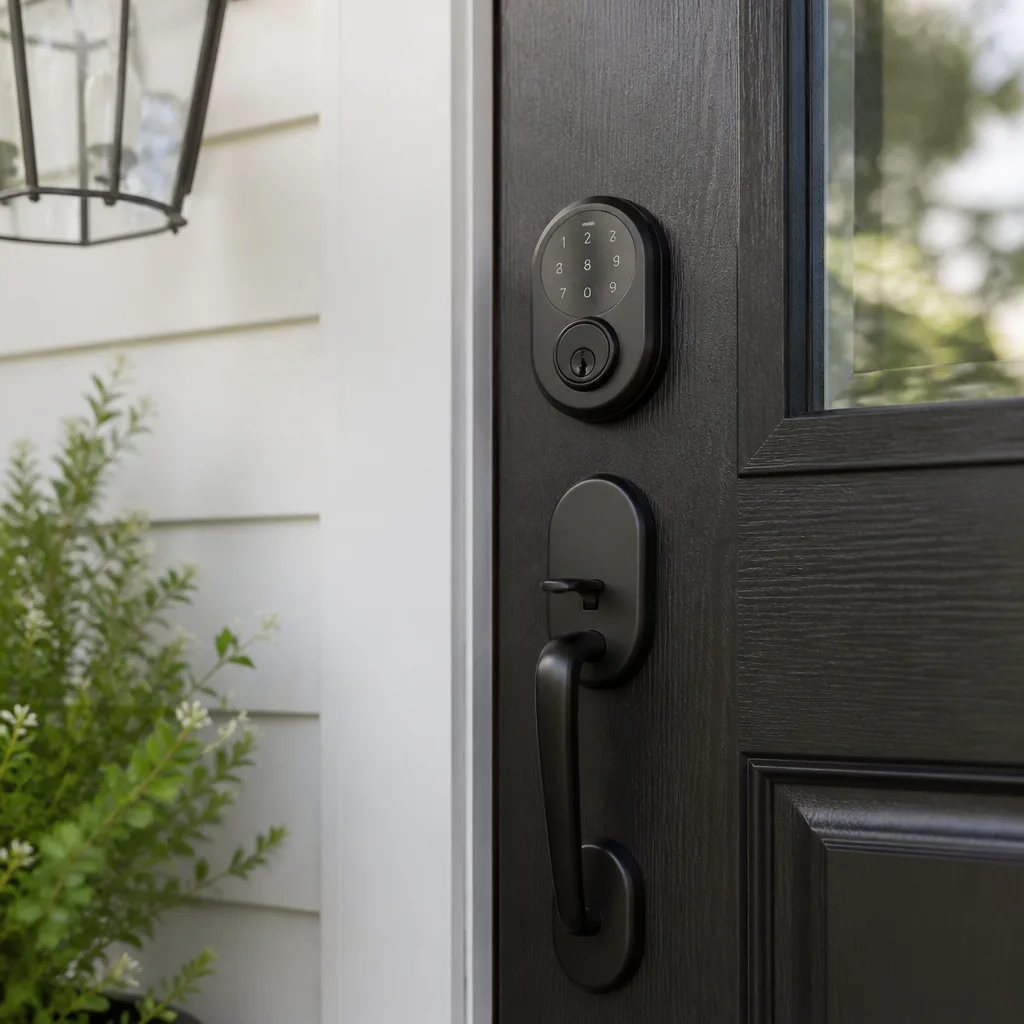 Smart locks
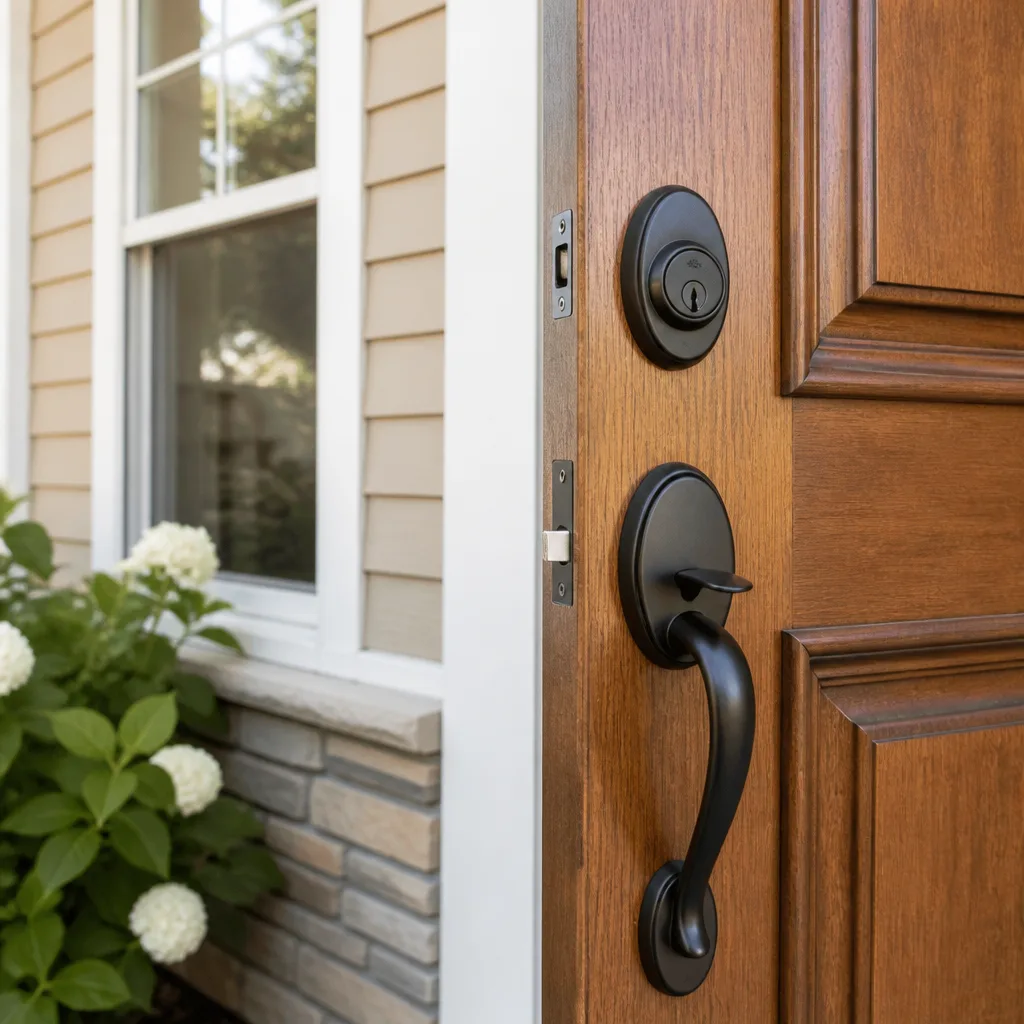 House lockouts
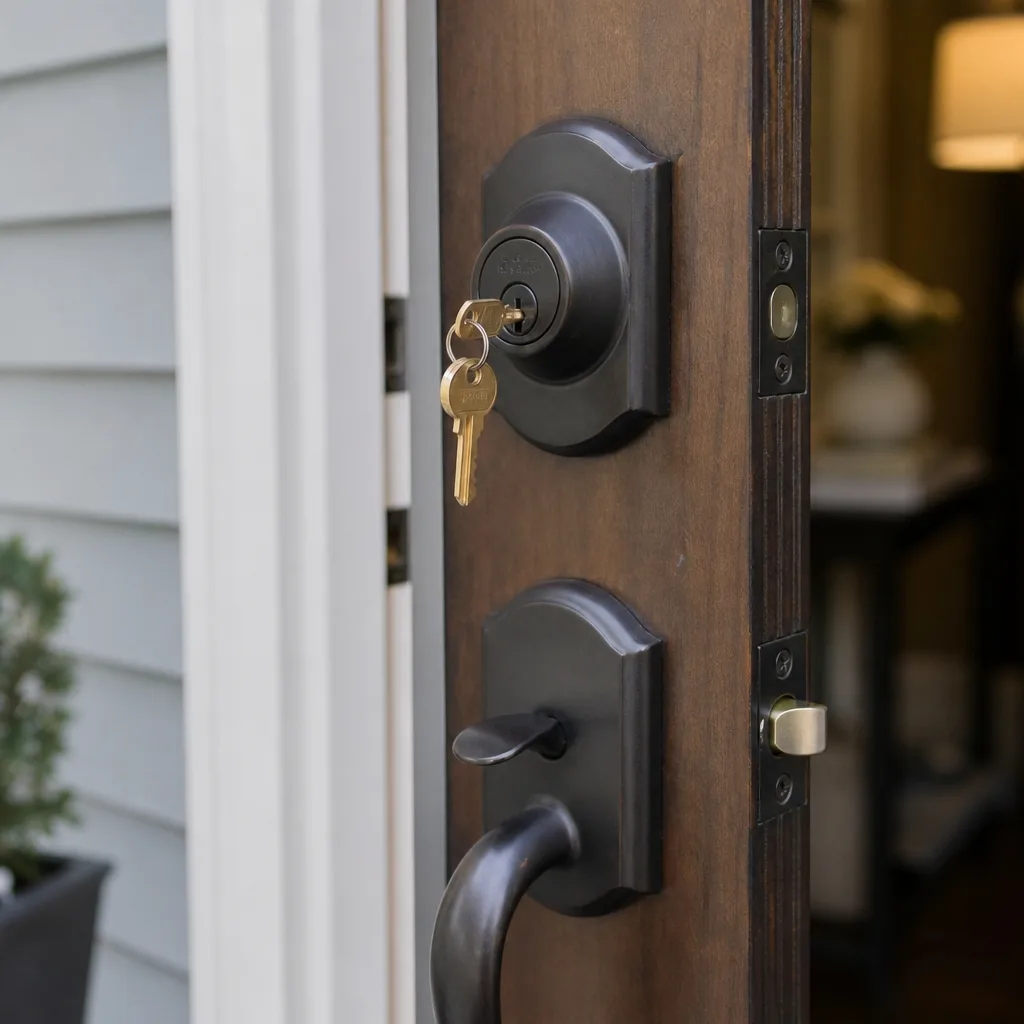 Re-keying
 Deadbolt upgrades
 Schlage
 Kwikset
 Car keys & fobs
Non-destructive entry first, always - and we re-key Schlage, Kwikset, and Baldwin locks on the spot while you watch
You get a price before we start. It does not change when we arrive. No surprises.
Get your free estimateDIY vs Professional Locksmith: The Chandler Homeowner’s Decision Guide
The internet is full of locksmith advice that treats every lock job like brain surgery, and other corners that treat every lock job like a Lego set. Neither is true. A Chandler homeowner with a Phillips screwdriver and fifteen spare minutes can absolutely replace a worn Kwikset knob on a pre-drilled door. That same homeowner cannot rekey a Schlage B-series deadbolt to match an existing key without a pinning kit, follower tool, and enough practice reps to feel the difference between a spring that seated correctly and one that’s about to fail. This guide draws the actual line. You’ll learn which jobs you can own, which ones cost more to fix than to hire out the first time, and how Chandler’s specific climate and housing stock factor into both. We’ll also show where professional-grade hardware like Medeco and Mul-T-Lock genuinely changes the DIY equation.
Styles & brands we work with
Quick Answer
DIY is the right call for surface-level work: replacing a knob or lever on a pre-drilled door, swapping smart lock batteries, and adjusting a slightly misaligned strike plate. Professional is the right call for anything involving rekeying a cylinder, master key systems, fresh boreholes that didn’t exist before, grade-1 deadbolt installation, or commercial hardware. In Chandler, the cost of a botched DIY lock job typically exceeds the service call you were trying to avoid. Most homeowners should own replacement and alignment work, and hire out rekeying and structural hardware changes.
Table of Contents
- The Definitive DIY-Safe List
- The Professional-Required List
- The Hidden Cost of a Failed DIY Job
- Arizona Resale Disclosure and DIY Lock Work
- The One Tool That Changes Everything: Kwikset SmartKey vs. Pin Kits
- How Chandler’s Climate Affects Your Lock Decisions
- Common Mistakes to Avoid
- When to Call a Professional
- Frequently Asked Questions
- The Bottom Line
The Definitive DIY-Safe List
Let’s start with what you can confidently handle without calling anyone. These tasks require basic hand tools, no specialized lock knowledge, and carry almost zero risk of damaging your door or hardware if you follow the steps. We’ve seen Chandler homeowners complete all of these on a Saturday morning and have the job hold up for years.
Lock replacement on a pre-drilled door. If your door already has a standard 2-1/8″ borehole and a 1″ cross bore, replacing a knob or lever is a screwdriver job. The holes line up, the latch slides in, the screws thread into pre-existing threaded inserts or pilot holes. This includes swapping a tired Kwikset for a Baldwin or Schlage residential knob. The door’s geometry does the heavy lifting; you’re just fastening hardware to an existing opening.
Smart lock battery swap. Dead batteries in a smart lock are the single most common lock service call we get in Chandler, and it’s a sixty-second fix. Remove the interior cover, swap the batteries, replace the cover. Most smart locks use AA or AAA batteries and beep or blink to warn you weeks in advance. The only caveat: keep the physical key override somewhere you can reach from outside, since a dead smart lock with no key means a lockout.
Basic deadbolt alignment adjustment. When a deadbolt binds or requires shoulder pressure to throw, the usual culprit is a strike plate that’s drifted a millimeter or two. Loosening the two strike plate screws, nudging the plate slightly toward the bolt’s throw direction, and retightening takes under ten minutes. A file can widen a strike opening by a hair if the bolt catches. This is adjustment, not structural work, and it’s fully within a careful homeowner’s reach.
Latch plate and hinge tightening. Loose hinge screws cause a door to sag, which causes the latch to miss the strike entirely. Tighten the upper hinge screws first with a longer screw that bites into the rough framing behind the jamb, and the door typically realigns. This is maintenance, not locksmithing, and it prevents half the ‘latch won’t catch’ calls we see.
The common thread: these jobs work with hardware that already fits. You’re not cutting anything, pinning anything, or changing the door’s geometry. Chandler’s dry climate actually works in your favor here; stripped screws and seized hardware are less common than in humid regions, so a careful DIYer rarely fights rust or swelling.
The Professional-Required List
Now the line. These jobs involve internal lock mechanics, structural modification, or security-critical tolerances that a YouTube video cannot teach you in one sitting. In our experience across Chandler, Scottsdale, and the East Valley, these are the calls where homeowners most often arrive at ‘I should have called first’ after spending twice the money on a rescue.
Rekeying any cylinder to match an existing master key system. This is not a ‘watch one tutorial and go’ task. Master key systems use two shear lines per pin chamber, and a single mis-pinned chamber either breaks the master key hierarchy or lets the wrong key turn the lock. You need the existing bitting chart, the correct top and master pins, and a follower tool to keep driver pins and springs contained. Get one pin height wrong and the lock feels fine until the master key fails or a sub-key stops working weeks later. Commercial properties in Chandler with Sargent or Schlage master systems should never see a DIY rekey attempt.
Installing a grade-1 deadbolt on a new bore. An existing door with no deadbolt hole needs a 2-1/8″ hole saw, a 1″ cross bore, and precise backset alignment. The backset (distance from door edge to bore center) is almost always 2-3/8″ or 2-3/4″, and getting it wrong means the deadbolt tailpiece won’t reach the thumb turn. Worse, an off-center or angled bore leaves the bolt misaligned with the strike, weakening the entire assembly. Grade-1 deadbolts are force-resistant hardware; a sloppy bore undercuts that rating before the lock is even installed.
Any commercial access control work. Card readers, electric strikes, request-to-exit sensors, and networked access panels are not residential locks with a different label. They involve low-voltage wiring, fail-safe versus fail-secure configuration, and fire code compliance on exit doors. A Chandler homeowner with a home office or rental unit does not need commercial access control, but a property manager or small business owner should not treat it as a weekend project. The liability alone, if a fire exit fails to release, is not worth the saved invoice.
Rekeying to match a high-security restricted keyway. If you own Medeco, Mul-T-Lock, or Abloy cylinders, the keys are patent-protected and cannot be duplicated at a hardware store. Rekeying these locks requires manufacturer-controlled pins and, in many cases, a registered locksmith account with the brand. Attempting to re-pin a Medeco with standard Schlage pins downgrades the lock’s security and voids the key control that made it worth buying. You paid for restricted duplication; keep it intact by hiring someone with the right pin stock.
The Hidden Cost of a Failed DIY Job
Every locksmith in Chandler has a version of this story: a homeowner tried to save $80 and ended up spending $350 plus the cost of the hardware they already ruined. The failure mode is almost always the same, and it’s worth understanding before you put a drill to your door.
The most common casualty is a stripped screw hole. Door slabs are built with a solid block at the latch edge and lock bore, but the face screw holes for the deadbolt or knob often thread directly into the wood through a metal reinforcement plate. Cross-thread a machine screw under a drill’s torque, and the threads in the plate are gone. The lock now wobbles, or worse, spins the interior thumb piece without engaging. Fixing that requires a professional to replace the reinforcement plate or re-drill and install threaded inserts, plus the cost of the hardware you’ve already mangled. The ‘free’ DIY install now costs more than the professional install would have, and you’ve lost an afternoon.
The second hidden cost is the misaligned bore. A hole saw wanders, especially through a steel door skin or a fiberglass face. If your fresh deadbolt bore lands one-eighth of an inch off center, the bolt throw binds against the strike plate interior. You can file the strike, but you’re now filing away the metal that was supposed to resist kick-in force. The lock works, technically, but it’s weaker than the hardware rating suggests. In Chandler, where single-story homes with backyard-facing side doors are common, a weak side-door deadbolt is a real vulnerability.
The third cost is time. A professional rekey of three cylinders takes about twenty minutes. A first-time DIY rekey with a pin kit usually takes an afternoon, two disassemblies, at least one lost spring, and a trip back to the hardware store for a follower tool you didn’t know existed. Your time has value; the math almost never works in the DIY rekey’s favor, which is why rekey services in the East Valley remain one of the most cost-effective calls homeowners make.
Arizona Resale Disclosure and DIY Lock Work
Chandler homeowners who plan to sell within a few years should think about DIY lock work differently than long-term owners. Arizona’s seller disclosure requirements ask about known material defects affecting the property’s value or safety. A door that doesn’t latch correctly, a deadbolt that binds, or a front entry that requires a ‘special technique’ to operate is a known defect. The seller’s disclosure statement asks, in plain language, whether you’re aware of any problems with the doors, locks, or security features.
Here’s the practical implication: a botched DIY deadbolt installation that works ‘well enough’ for you becomes a disclosure headache at resale. You either disclose the defect (and negotiate the repair cost into the sale price) or you don’t disclose it (and risk a post-sale dispute). Neither is attractive. A buyer’s home inspector will operate every door and lock during the inspection; a misaligned deadbolt gets photographed and written up every time. The repair cost comes out of your proceeds at closing, usually at a higher rate than the original professional install would have cost.
There’s also the key-control issue. Arizona does not require sellers to rekey locks, but most real estate agents recommend it, and a seller who can’t account for every copied key is on thin ethical ground. A professional rekey after selling your Chandler home costs a few hundred dollars and provides a clean key handoff. A DIY rekey gone sideways, discovered during the buyer’s final walkthrough when their new front door key only opens two of three locks, becomes a closing-delay emergency. The professional route is cheaper than the dispute.
One more structural point: Arizona’s disclosure obligations apply to known conditions, not hypotheticals. If you drilled a new borehole for a deadbolt and the hole is slightly off, that’s a known condition. If a future buyer discovers it and can show you knew, you’ve got an argument on your hands. The disclosure form is not a place for wishful thinking.
The One Tool That Changes Everything: Kwikset SmartKey vs. Pin Kits
If you want to rekey your own locks without becoming a locksmith, the Kwikset SmartKey system is the only legitimate answer we can give you. It’s also the reason the DIY-vs-pro line is not as straight as most guides pretend.
How SmartKey works: the cylinder contains a reset mechanism that lets you re-pin the lock to a new key in about ten seconds without removing the lock from the door or taking apart the cylinder. You insert the current key, turn 45 degrees, insert the reset tool (a small flat metal probe that ships with the lock), remove the key, insert the new key, turn back, and you’re done. No pin kit, no follower tool, no springs to lose. The lock literally rekeys itself from the outside.
What this means for Chandler homeowners: if your home already has Kwikset SmartKey locks, rekeying after a move, a lost key, or a tenant turnover is a legitimately DIY task. You can buy a SmartKey reset tool from any hardware store for under fifteen dollars, and you can rekey every door in your house in ten minutes. This is not the same as saying ‘rekeying is DIY’; it’s saying this specific system makes rekeying DIY-safe. A standard pin-and-tumbler cylinder, from Schlage, Baldwin, Yale, or anyone else, does not.
The catch: SmartKey cylinders are not the strongest hardware on the market. The reset mechanism adds complexity that, in independent tests, reduces the lock’s resistance to forced manipulation compared to a traditional pinned cylinder. For a Chandler homeowner in a low-crime subdivision, SmartKey is a fine tradeoff: good enough security, unmatched convenience. For a homeowner who has already invested in Schlage B-series deadbolts or who is considering an upgrade to Mul-T-Lock or Medeco, the SmartKey approach is a step backward in hardening. The decision matrix is: convenience versus force resistance. SmartKey wins the first; grade-1 deadbolts and high-security cylinders win the second.
The scenario where SmartKey is the wrong call: you’ve just experienced a break-in attempt, and you’re rekeying as part of a security overhaul. In that moment, you don’t want a convenient rekey system; you want the strongest cylinder and bolt you can afford, professionally installed. A rekey to match a new Schlage or Baldwin keyway, done by a locksmith with a pin kit, gives you a traditional cylinder without the reset mechanism. For Chandler homeowners upgrading after an incident, we often steer them toward professional rekey services with standard pinned hardware rather than SmartKey convenience.
How Chandler’s Climate Affects Your Lock Decisions
Chandler’s desert climate does two things to locks: dust and heat. Both matter more than most homeowners realize when deciding between DIY and professional work.
Dust. Chandler sits in the Sonoran Desert, and fine dust gets into everything weather-stripped, including lock cylinders. Over the course of a few monsoon seasons, cylinder internals accumulate a gray-brown film that makes pins sluggish and keys require jiggling. This is a maintenance problem, not a security problem, and it’s one of the few places where DIY maintenance is genuinely useful. A dry graphite lubricant, applied sparingly through the keyway, restores smooth operation. Avoid liquid lubricants; they attract more dust and eventually become a gritty paste. If your lock feels gummed up despite graphite, the cylinder is beyond cleaning and needs replacing, which is a professional job only if the existing hardware is high-security (Medeco, Mul-T-Lock, Abloy) with restricted keyways.
Heat. Chandler routinely exceeds 110 degrees in summer, and exterior doors facing west or south absorb radiant heat for hours. Metal door slabs expand, and even a slight expansion can push a deadbolt out of alignment with its strike. If your deadbolt only binds in summer and works fine in winter, it’s not broken; it’s thermal expansion. The fix is a strike plate adjustment, which is on the DIY-safe list above. But here’s the nuance: a grade-1 deadbolt with a reinforced strike plate tolerates this expansion better than a cheap knob’s spindly latch. If you’re already doing maintenance, upgrading to a quality Schlage or Baldwin deadbolt with a heavy strike plate is a one-time fix that prevents the seasonal call. In Chandler’s heat, the hardware grade is not cosmetic.
UV exposure. Smart locks with plastic exterior keypads fade and turn brittle in direct desert sunlight. If your front door faces west with no shade, a smart lock’s exterior panel might show cracking within two to three summers. A DIY battery swap doesn’t fix sun damage; a full lock replacement does. When replacing, consider a metal-keypad option or install a shade over the entry. These are Chandler-specific longevity decisions that a generic DIY guide won’t mention.
Common Mistakes to Avoid
- Using a drill to tighten lock screws. Machine screws on lock faceplates need hand torque, not a drill’s full spin. Cross-threading under power strips the threads inside the reinforcement plate, and the lock is ruined. A hand screwdriver gives you the feedback you need to stop before damage.
- Buying a ‘universal’ deadbolt for a door with an unusual backset. Most Chandler homes built in the last twenty years have standard 2-3/8″ backsets, but older homes and custom doors sometimes use 5″ backsets. A universal deadbolt that claims to fit both often fits neither well. Measure the distance from door edge to bore center before buying anything.
- Rekeying to a ‘close enough’ key from a hardware store. A key that looks similar is not the same as a key that works. Different keyways (Schlage C, Kwikset KW1, Yale Y1) are not interchangeable, even if the blanks look vaguely alike. Forcing the wrong blank into a cylinder is a quick way to jam it permanently.
- Ignoring the importance of the strike plate. A grade-1 deadbolt mounted to a flimsy strike plate with 3/4″ screws is not actually a grade-1 installation. The strike plate and 3″ screws that bite into the framing are half the security equation. DIYers focus on the lock body and forget this, and the door kicks in just as easily.
- Losing the SmartKey reset tool before you rekey. If your Kwikset SmartKey lock ships with a reset tool and you toss the packaging, your rekey-by-owner capability goes with it. Replacement tools are cheap, but discovering you need one at 9 p.m. on a Sunday after changing the locks for a new tenant is a preventable headache.
- Assuming all smart locks work with all doors. Some smart locks require a specific tailpiece length or have minimum bore clearance requirements. Measure; don’t assume. A smart lock that doesn’t fit cleanly is a lockout waiting to happen, and Chandler’s after-hours lockout calls are not the time to discover a compatibility issue.
- Skipping the rekey after buying a Chandler home. This is the most common and most fixable mistake. You have no idea how many copies of the previous owner’s keys exist. A professional rekey in Chandler costs less than the deductible on a claim following a keyed entry.
When to Call a Professional
If you’ve read this far, the line should be clear. You can replace hardware on pre-drilled doors, swap smart lock batteries, and adjust strike plates. You should not rekey a pinned cylinder without training, bore a new deadbolt hole without the right tools, touch commercial access hardware, or attempt anything on a high-security restricted keyway. If you’re locked out right now, the answer is obvious: this is not a DIY moment. If you just closed on a Chandler home and need clean key control, a professional rekey takes minutes and costs less than most closing lunches. If you’re upgrading after a security concern, the hardware choice matters as much as the installation, and a pro can guide you through Schlage, Baldwin, Medeco, Mul-T-Lock, and Abloy options without guessing. Thornton Lock & Key offers free estimates in Chandler; call (888) 455-7175 and we’ll walk you through what you actually need.
Frequently Asked Questions
A standard rekey in Chandler typically runs $75 to $200 depending on the number of cylinders and hardware brand; a new deadbolt installation on an existing bore runs $150 to $350 including hardware; an emergency lockout call runs $100 to $250 depending on time of day and lock type. These are honest ranges, not teaser prices. Call (888) 455-7175 for an exact quote, and the price we quote on the phone is the price on the invoice.
Only if your locks are Kwikset SmartKey and you have the reset tool, or if you invest in a full pin kit, follower tool, and tweezers plus enough practice cylinders to build the skill. For standard Schlage, Baldwin, or Yale pin-and-tumbler cylinders, rekeying without the right tools is the fastest way to render a lock inoperable. We recommend professional rekey services for anything that isn’t SmartKey.
Yes. The full price is quoted on the phone before anyone is dispatched, and that is the price on the invoice. No arrival surcharge, no ‘unexpected complication’ upcharge. If the job turns out to need more work than described, you’ll approve the change before it happens.
We staff emergency locksmith availability across the East Valley, and typical response to Chandler addresses is under forty-five minutes depending on traffic on the Loop 202 and where you are relative to the 101. Emergency locksmith service in the Chandler area is dispatched based on current call volume, and we’ll give you an honest arrival window when you call.
No, and in most cases you shouldn’t. Dealerships charge a markup on transponder and fob keys and often require the vehicle on-site, which is not helpful when your car is locked in a Chandler driveway with the key inside. Car key replacement in the East Valley handles transponder and fob-style keys directly, usually for less than the dealership quote and without the wait.
Yes. We service Medeco, Mul-T-Lock, Abloy, Sargent, and other high-security and restricted-keyway brands, including rekeying where the manufacturer’s pin stock and key control requirements are maintained. These are not brands to trust to a cut-rate provider; the key control only works if the pinning stays within the authorized channel.
The Bottom Line
The DIY vs. professional locksmith decision has a real answer, and it’s not ‘always call us.’ Replace knob hardware on an existing bore yourself. Swap smart lock batteries yourself. Adjust a strike plate yourself. Rekey a SmartKey lock yourself if you have the tool. But rekeying standard cylinders, drilling new bores, installing grade-1 deadbolts from scratch, touching commercial hardware, and anything involving high-security restricted keyways is professional territory. The cost of a failed DIY attempt in Chandler almost always exceeds the original professional quote, and the security risk compounds if you don’t realize the failure until the door fails under force. Know the line, work on the right side of it, and call Thornton Lock & Key when the job crosses over.
Written by the team at Thornton Lock & Key, serving Chandler since 2018.